
ARTICLE
Locking In Design Intent: How Architects Are
Staying Ahead of Value Engineering
Value engineering used to be a possibility. Now it's a certainty. Ask almost any architect working today, and they'll tell you it's not a question of if a project gets value engineered, but when and how much of the original vision survives. That’s why design professionals are turning to high-value materials — like Wetwall™ waterproof wall panels and other Wilsonart surfaces — to maximize the value of their project while preserving the original design vision.
This shift didn't happen overnight. Over the last few decades, the architect's role on the job site has steadily eroded, as contractors gained more input on contract language and general conditions. Design-build delivery, where the contractor comes on early, is now the norm, accounting for roughly 47% of U.S. construction spending, projected to approach 50% by 2028 (DBIA). Fewer site visits and more restrictions have followed. Value engineering has shifted, too. The AIA now advises architects to treat it as a chance to build in long-term value from day one, not a threat to react to later (AIA).
Design intent degrades in stages: during permitting, when the focus shifts to code compliance, and again at issued-for-construction, when budget realities dictate substitutions.
Given that reality, the strategy for many architects has changed. Instead of defending a design after the fact, the goal is to hold the line earlier, during design development, by locking in product decisions so tightly that swapping one out threatens to unravel the whole concept.
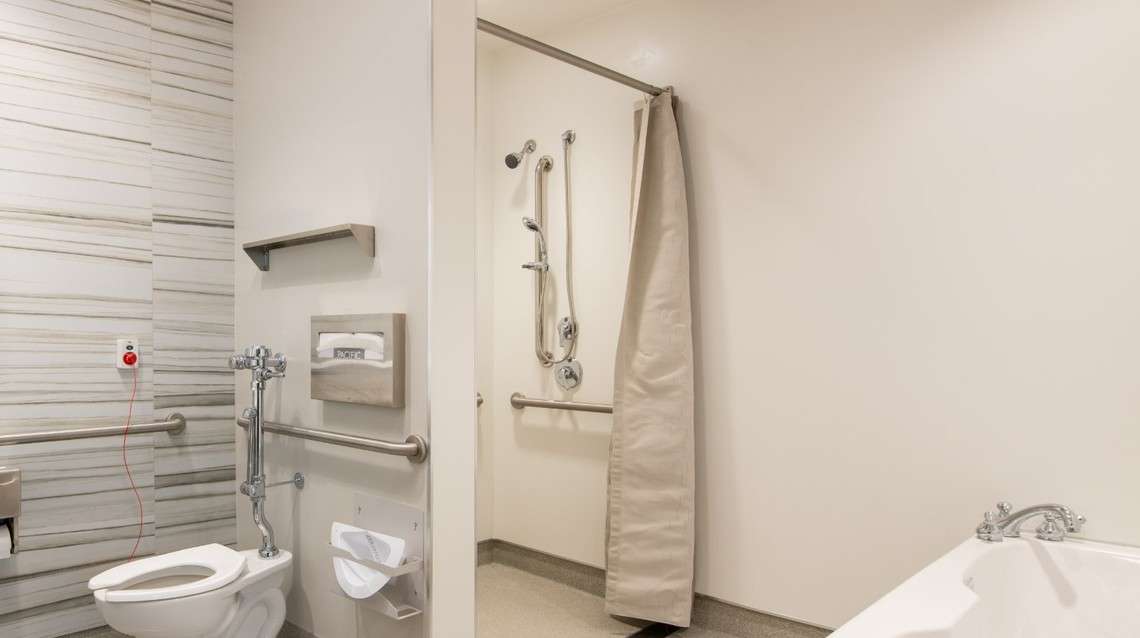
Design Featured: Wetwall: Aria White
"I've learned to treat product choices like load-bearing walls," explained Specifications Consultant Stephen T. Ryan, RA, CSI, CCS, CDT, NCARB. "If I leave something vague, it's the first thing that gets swapped for a cheaper option down the line. But if I specify it early and build the whole design around it, pulling it out means the contractor has to rethink everything else, too. Wetwall waterproof wall panels are a good example. It's held up my design vision on multiple projects."
That approach matters most on high-unit-count projects like multifamily, hotel guest rooms, and senior living, where shower walls involve many parts,
multiple trades, and real installation risk, amplified by a labor market stretched thin, with the industry needing roughly 439,000 additional workers in 2025 alone, skilled trades among the hardest to fill (Fixr). Material costs add to the pressure, too: lumber prices are still running about 70% higher than pre-pandemic levels (AIA).
With fewer parts and less labor as a complete system, surfaces like Wetwall are already the cost-efficient choice, leaving contractors little financial incentive to value engineer it out. On a 300-unit project, that adds up fast. The lesson: pairing design intent with a genuine business case is the clearest way architects have left to protect what they set out to build.
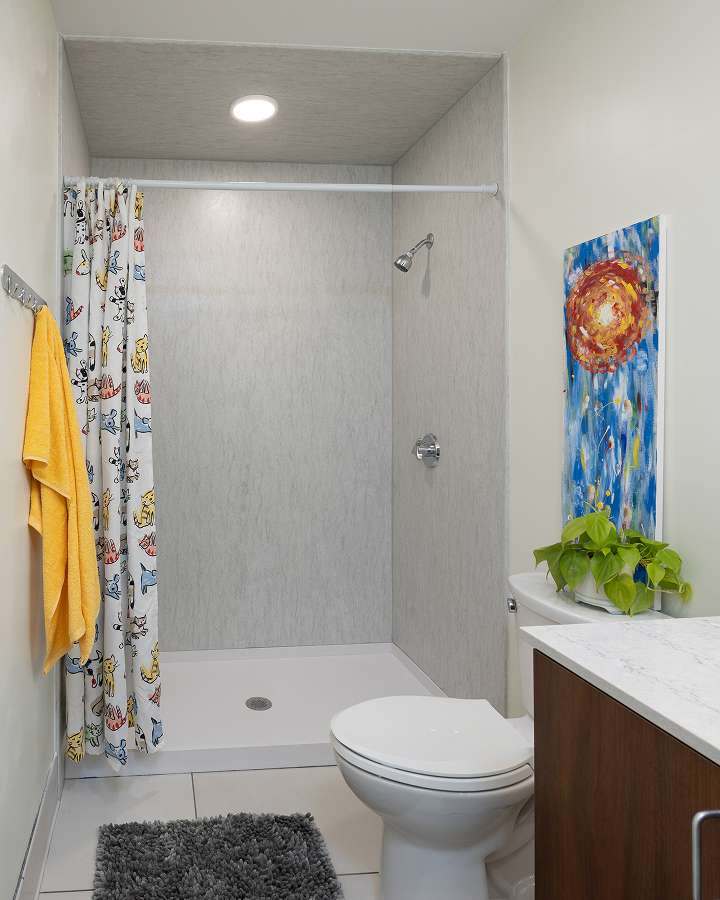
Design Featured: Wetwall: Tahiti Sands
Other Ways Architects Are Holding the Line
Product selection is one lever, but it's part of a broader shift in how the profession approaches value engineering. A few other strategies are gaining traction:
- Writing performance specs, not material specs. Naming the outcome a material has to hit, rather than one exact product, closes the loophole contractors use to swap in something that's technically compliant but misses the point. The Construction Specifications Institute (CSI) maintains the shared language and standardized formats, like MasterSpec, that keep that intent intact as a project moves from design through construction and handover (CSI).
- Running formal value studies early, during design development. SAVE International, the professional society behind the value methodology, recommends conducting value studies as early as the schematic and design development phases, not after bids come in, since redirecting a design gets far more expensive the later it happens (SAVE International).
- Staying engaged through construction administration. Fewer site visits mean fewer chances to catch a deviation before it's built and covered up, a gap that shows up directly in project quality and cost (NAIOP).
- Treating value engineering as an early, collaborative conversation instead of a late-stage rescue mission. Architects who bring contractors into cost discussions from day one, rather than reacting once bids come in high, tend to protect design integrity instead of losing it (AIA).
- Rethinking how design intent gets modeled and shared. Industry practitioners are debating whether the traditional 2D construction document, largely unchanged since the 1970s, is still the best way to carry design intent through to the builder, or whether shared, parallel models could preserve more of it (Harvard Design Magazine).
None of these strategies works in isolation. But together with deliberate, business-case-backed product choices, they're how architects are starting to treat design intent as something to be engineered for, not just hoped for.
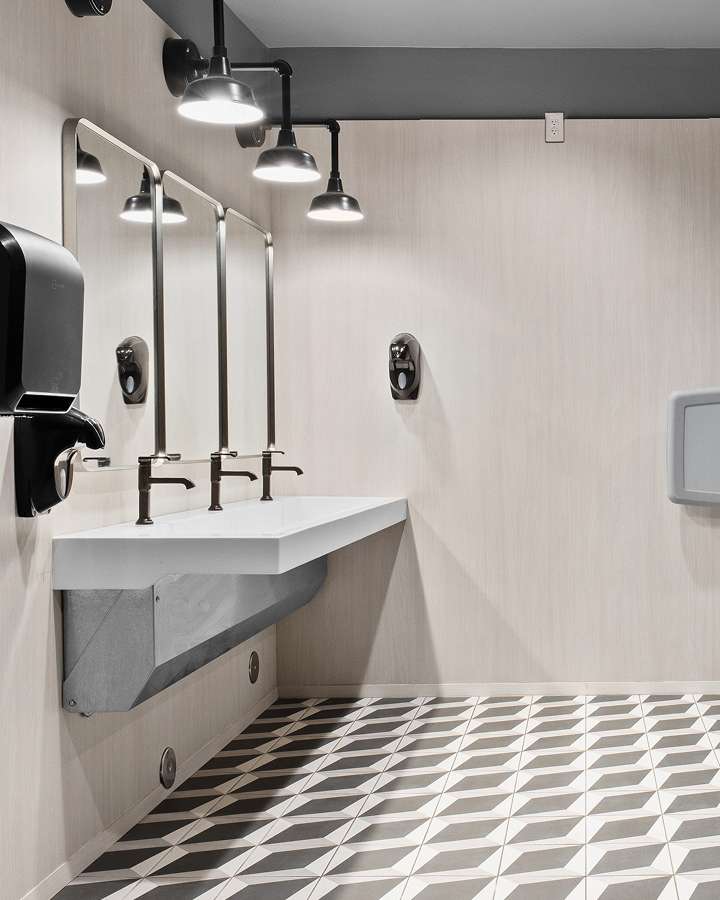
Design Featured: Wetwall: Darlington Cherry
To read more articles, visit our Inspiration page.
WILSONART EMAIL NEWSLETTER
Stay Connected.
Sign up to get interesting news and updates about new products, tools, and inspiration delivered right to your inbox.

Validate your login
Sign In
Register